
You built your e-bike from the box. Here is what goes wrong first.
A bike that ships in a box arrives mostly assembled, and the part you finish at home is the part that carries your weight and stops you. The faults that show up in the first month are rarely defects. They are usually a step that went slightly wrong on the living room floor.
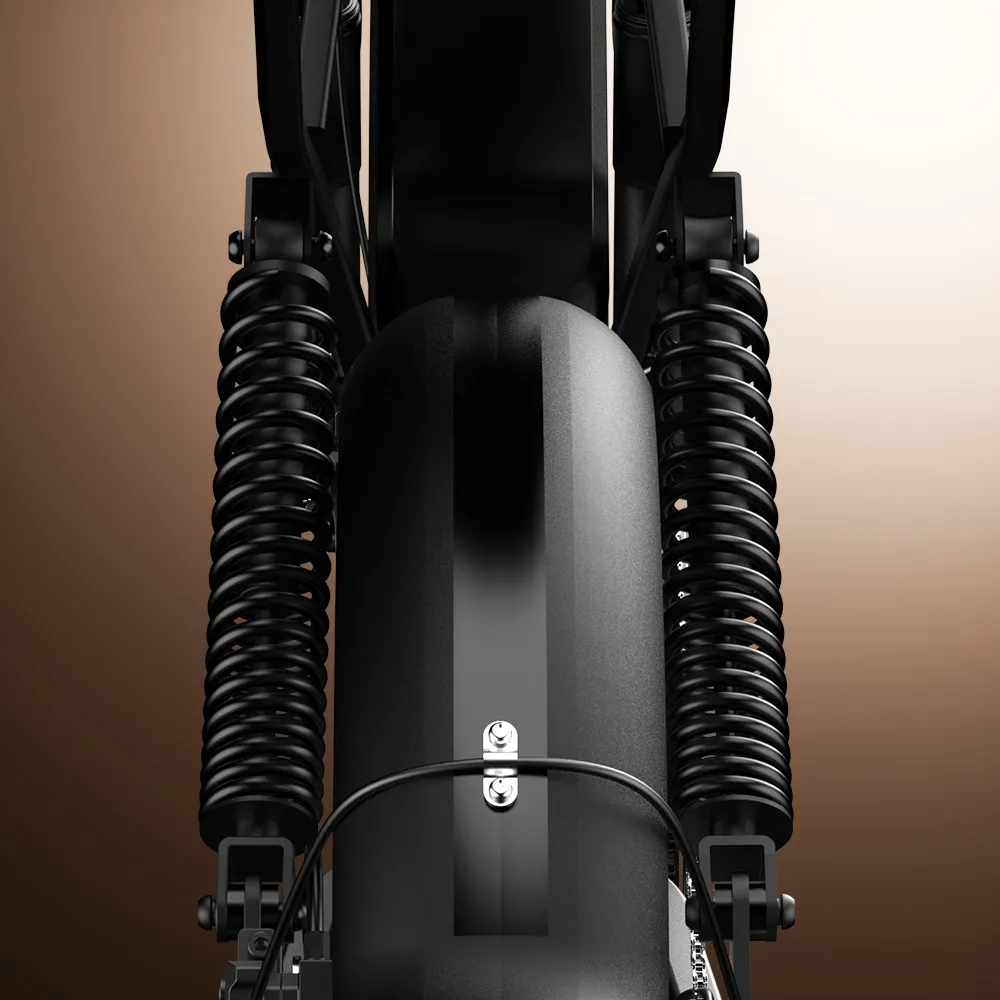
The short version
Most box e-bikes leave the factory with the frame, motor, battery mount and wiring done. You fit the handlebar, the front wheel, the pedals, often the fender and the lights, and sometimes the seat post.
Almost every early problem lives in those parts. A bike that rattles, rubs, pulls or cuts out in its first few weeks is far more likely to have something not tightened, seated or routed right than a bad motor or a bad pack. The checks below cover them in the order we find them.
The handlebar and stem
The stem bolts clamp both the handlebar and the steering. If they are only snug, the bars can slip downward under a hard stop or turn slightly out of line with the front wheel. Stand in front of the bike, hold the wheel between your knees and try to twist the bars. If they move, they are not tight enough.
The other half is the headset, the bearing the fork turns in. Squeeze the front brake and rock the bike forward and back. A knock or a click you can feel through the bars means the headset is loose, and riding on it wears the bearing quickly.
Most stems print a torque figure next to the bolts. It is there because too loose slips and too tight cracks, and on a heavy bike neither is a small thing.
The front wheel
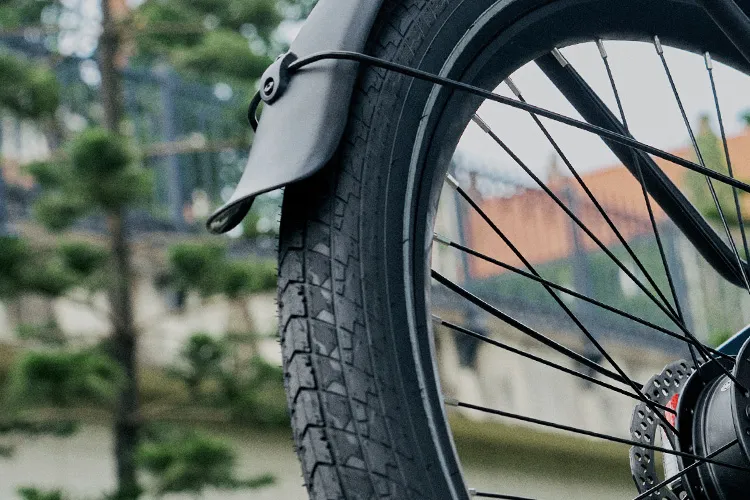
A front wheel that is not fully seated in the fork is the most serious mistake on this list, and an easy one to make. On a thru-axle, the axle has to thread all the way in and the lever close firmly. On a quick release, the lever should leave a mark on your palm when you close it. A lever you can close with two fingers is not holding anything.
If the wheel went in slightly crooked, the brake rotor will not sit centred in the caliper. That is where the next problem comes from.
Brakes that rub or pull to the bar
A faint, regular scraping as the wheel turns is a rotor touching a pad. It usually means the wheel is a little off-centre or the rotor took a knock in shipping. It costs range and wears pads, and it is one of the first things we look at when someone says a new bike does not go as far as it should.
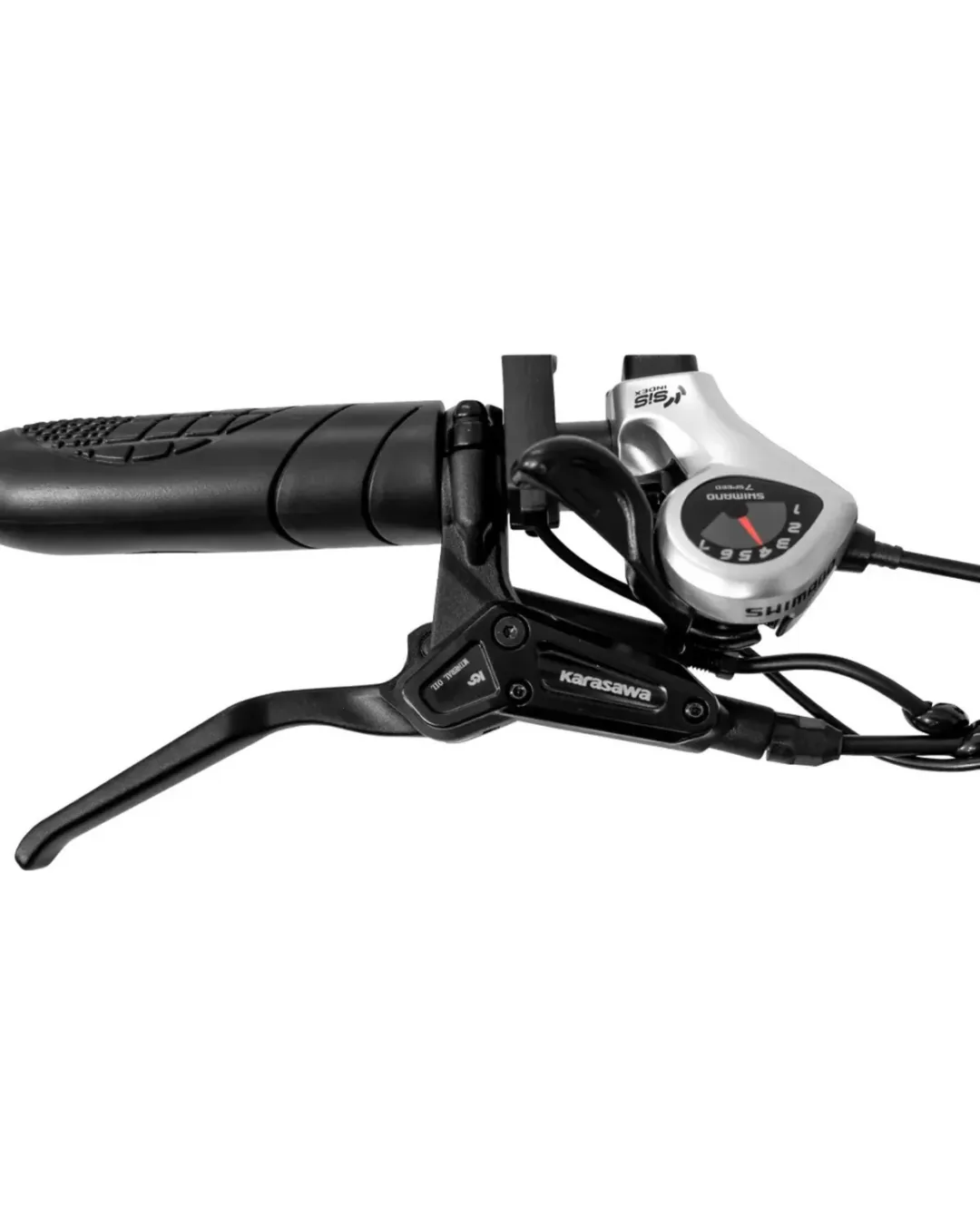
On mechanical disc brakes, the cable is often left slack at the factory so it survives the box. The lever then travels most of the way to the bar before the brake bites. That needs adjusting before the first ride, not after.
On hydraulic brakes, the levers sometimes arrive turned at an angle to protect them. Do not squeeze them while the wheel is out of the fork. That pushes the pads together until the rotor no longer fits. We go through both systems in hydraulic vs mechanical brakes.
The cables at the front
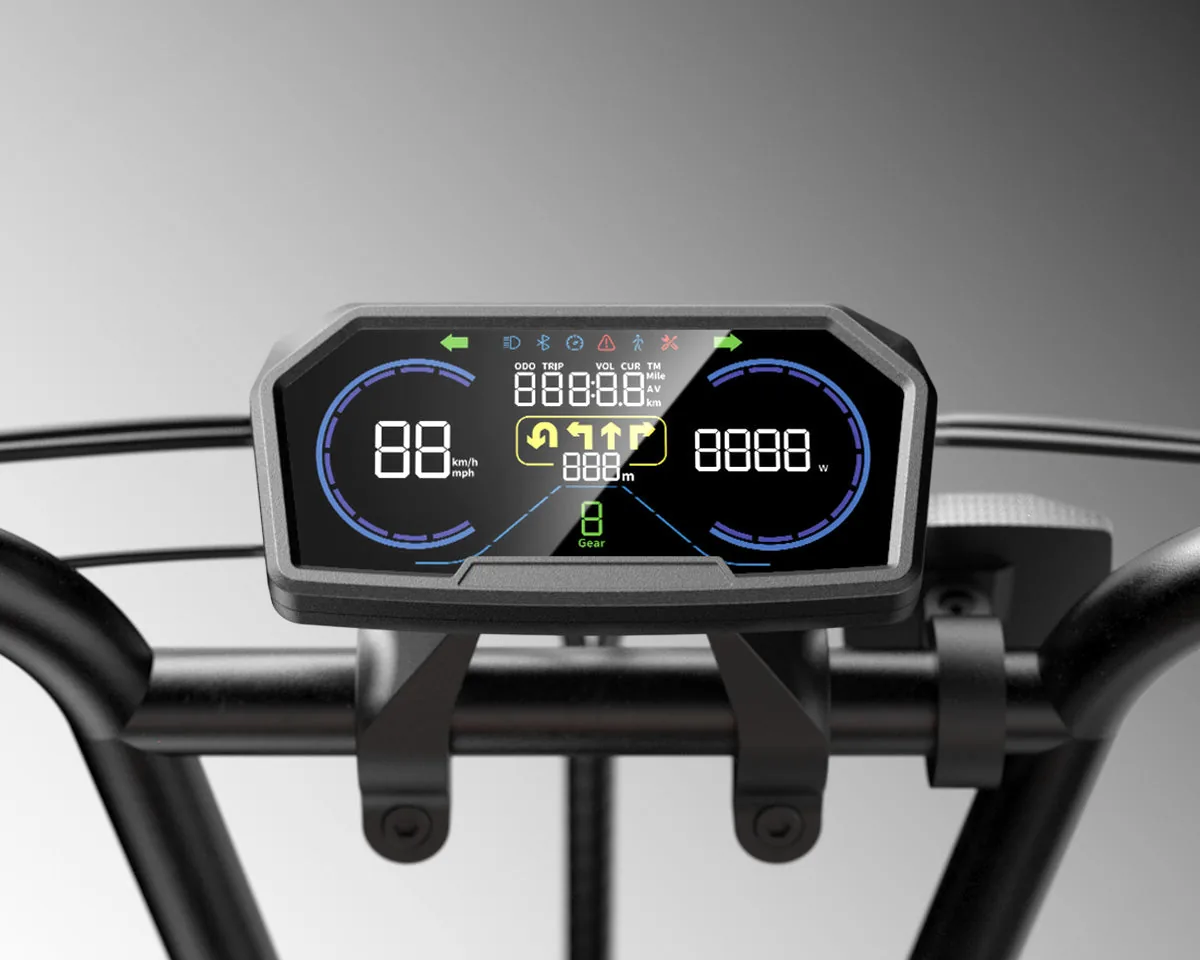
The display, throttle and brake sensors run cables down from the bars into the frame. During assembly they often get turned the wrong way around the stem, so when you steer fully to one side a cable pulls tight or gets pinched.
Turn the bars slowly all the way left and all the way right and watch every cable. None of them should go taut or get trapped against the frame. A connector that pulls apart over a few weeks of turning gives you a bike that cuts out over bumps, or one that will not turn on at all.
Pedals, and the one that unscrews
The left pedal has a reverse thread. It tightens anticlockwise. Force it the normal way and it goes in crooked, chews the thread in the crank arm, and works loose a few rides later. Pedals are marked L and R on the axle for a reason.
A pedal that clicks on every stroke is often just not tight. A crank arm that has been ridden loose for a while is usually beyond saving, so the clicking is worth taking seriously.
Spokes, in the first few hundred miles
This one is not your fault. New spokes settle, and a hub-motor wheel puts more strain through them than a normal bicycle wheel does. In the first few hundred miles, it is common for a few to lose tension.
Squeeze pairs of spokes together with your hand, all the way round the wheel. They should all feel about the same. One that is noticeably slacker, a ping on every turn, or a wheel that has started to wobble means the wheel needs truing. Ridden like that, the loose spoke takes the next ones with it.
After six years of working on these motors, the pattern is consistent: a wheel checked early stays true, and one left until it wobbles usually needs more than an adjustment.
Where to stop
Everything above is checkable with your eyes, your hands and the hex keys that came in the box. Stop at the battery and the controller. Do not open either, and use only the charger the bike came with.
If you would rather someone went over the whole bike once, that is what we do on the bench, whatever brand it is and wherever you bought it. You tell us what it is doing, we look and tell you what we found and what fixing it costs, and nothing is touched until you agree.
Some online brands do not sell parts to anyone outside their own network. If yours is one of them, we will tell you before you spend anything, and point you to who can help.
Volt World
7226 W Colonial DrOrlando, FL 32818
Monday to Friday, 9:00 AM to 6:00 PM EST