
Hydraulic or mechanical disc brakes: what you are actually choosing.
Both are disc brakes and both will stop the bike. The difference shows up in how hard you have to pull, how often they need attention, and what happens when they do.
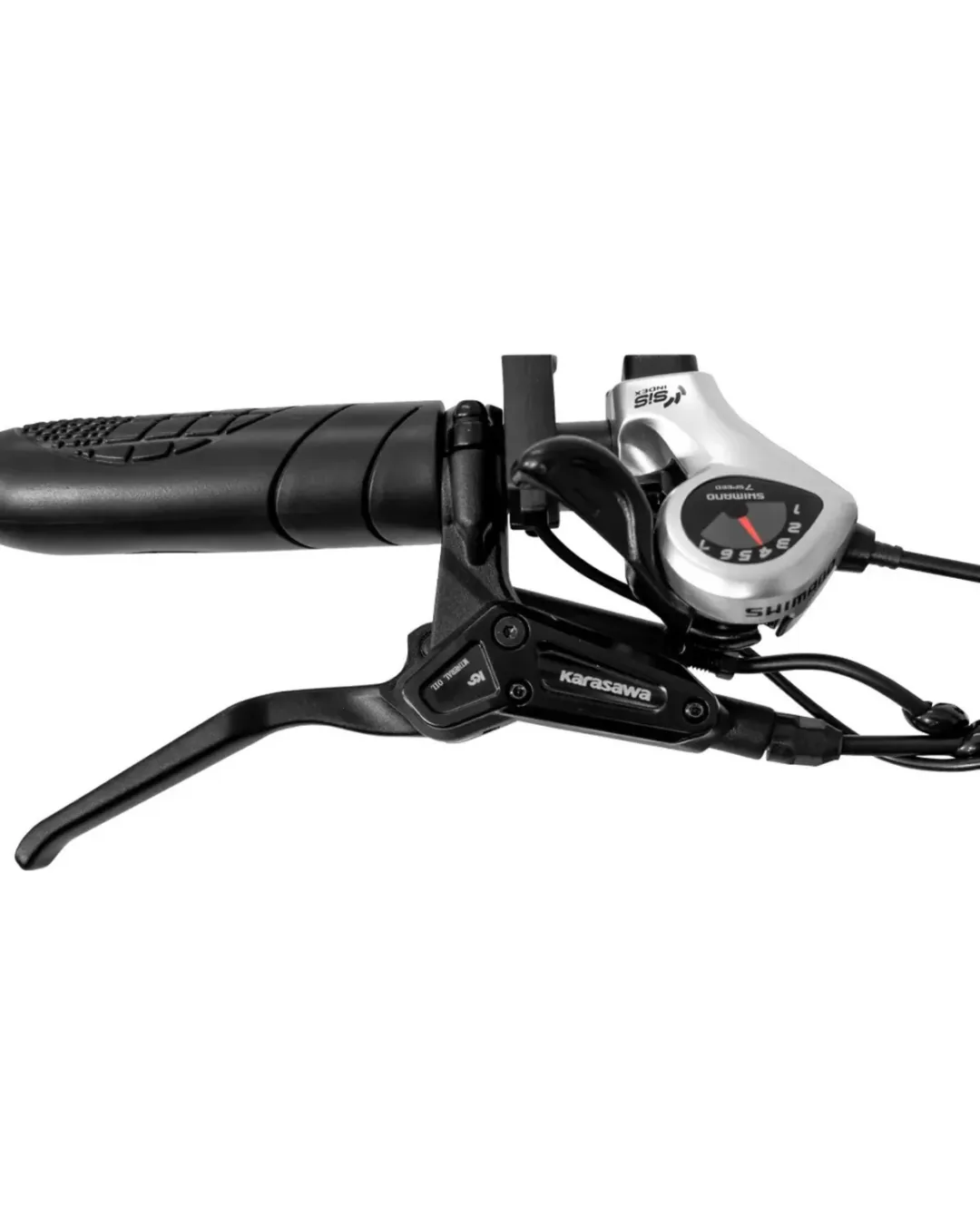
The short version
Hydraulic brakes push fluid through a sealed hose to the caliper. They need less force at the lever, stop more strongly, and take up pad wear on their own. When they do need work, it is a job for a bench.
Mechanical disc brakes pull a steel cable, the same idea as rim brakes on an ordinary bicycle. They are cheaper and easy to work on at home, and they need adjusting a lot more often.
On a light bike at low speed, either is fine. The heavier and faster the e-bike, the more the difference matters.
Why it matters more on an e-bike
An electric bike weighs two or three times what a normal bicycle does and spends far more of its time at 20 mph and above. Every stop asks the brakes to turn more of that speed into heat.
That is why most of what we sell runs hydraulics. The Urban X, Roma, CycHunter 2.0 and Nomad Pro all have hydraulic discs with a motor cut-off in the lever. The Run Mini and Cycrun 2.0 use mechanical discs, and on those bikes that is a reasonable choice rather than a corner cut.
How each one feels
A hydraulic lever is light and consistent. One or two fingers are enough to stop hard, and the feel does not change much from the first mile to the thousandth.
A mechanical lever needs more hand. As the cable stretches and the pads wear, the lever pulls further toward the bar before anything happens. Most riders do not notice it creeping until someone else rides the bike and says the brakes are soft.
Most mechanical calipers also move only one pad. The other is fixed and the rotor flexes over to meet it, which is part of why they need adjusting so often to stay sharp.
What mechanical brakes ask of you
Regular small adjustments. A barrel adjuster at the lever takes up cable stretch in a few seconds, and the fixed pad needs winding in by hand as it wears. Leave it, and you get a long lever pull and a pad that drags.
The good news is that almost everything is visible and fixable at home with a hex key, and a new cable is inexpensive. Water and grit get into the housing over time, which in a Florida rainy season means the cable starts to feel gritty sooner than you would expect.
What hydraulic brakes ask of you
Less, but less forgiving. Pads still wear and still need replacing. What changes is that the fluid occasionally needs a bleed, where the old fluid and any air are pushed out and replaced.
The sign is a lever that feels spongy, or one that pulls further on a long ride than at the start. That is air or tired fluid, and riding on it is not a good idea.
Two things not to do at home. Do not mix fluids: some systems use DOT brake fluid and some use mineral oil, and putting the wrong one in ruins the seals. And do not squeeze the lever with the wheel out of the bike, which can push the pistons closed until the rotor no longer fits.
Pads, on either system
Check them every few weeks if you ride daily. Look into the caliper from above: once there is about a millimetre of pad material left on the metal backing, replace them. Metal on rotor wrecks the rotor fast and turns a cheap job into a dearer one.
A brake that squeals is often contaminated rather than worn. Chain lube or a careless spray of cleaner on a rotor will do it. Pads that have soaked up oil usually cannot be saved, and the rotor needs cleaning before new ones go in.
A brake that rubs costs you range as well as pads. We covered that in why your range dropped.
Can you upgrade from mechanical to hydraulic
Usually yes, on a frame with standard disc mounts. It means new levers, calipers and hoses, and on an e-bike it also means levers with the motor cut-off sensor wired to that bike's controller. That last part is what makes it more than a parts swap.
Whether it is worth doing depends on the bike and how you ride it. On a bike you mostly ride slowly on flat paths, good pads and a fresh cable often close most of the gap for much less.
When to bring it in
Bring it in if the lever reaches the bar, feels spongy, or the bike pulls to one side when you brake. The same if you hear grinding, see fluid on the caliper or hose, or the motor does not cut when you pull the lever.
We service both kinds on the bench, on any brand: pads, rotors, cables, hydraulic bleeds and cut-off sensors. You get told what is wrong and what it costs before anything is touched.
Volt World
7226 W Colonial DrOrlando, FL 32818
Monday to Friday, 9:00 AM to 6:00 PM EST