
E-bike laws in Florida, read straight from the statute.
Most of what gets repeated about e-bike law is close enough to be misleading. Here is what Florida Statutes 316.003 and 316.20655 actually say, and the parts that catch people out.
The short version
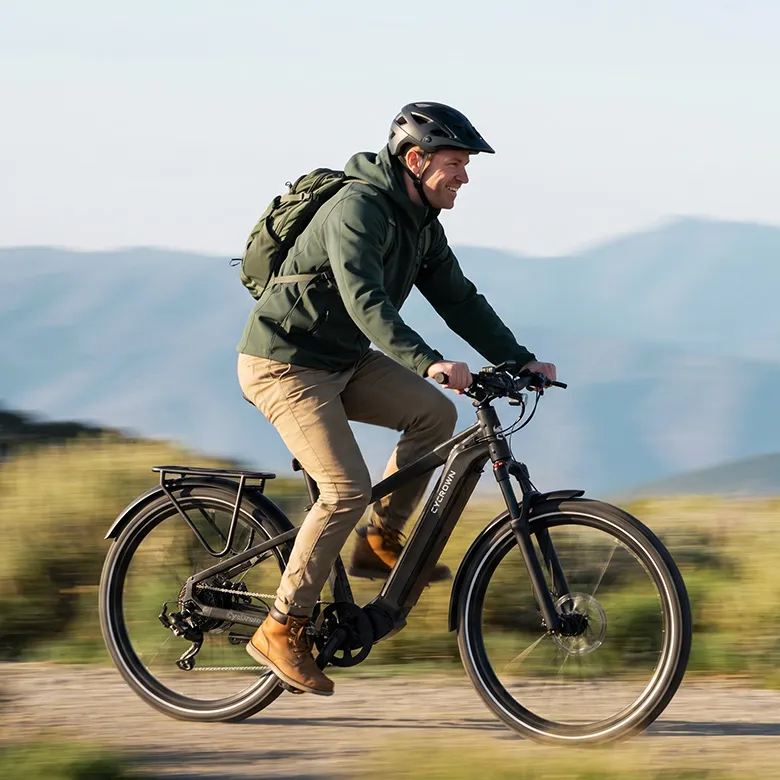
In Florida an electric bicycle is treated as a bicycle. You need no driver licence, no registration, no title and no insurance, and you may ride wherever bicycles are allowed.
The detail that matters is what counts as an electric bicycle in the first place, and who is still allowed to shut a particular path to you. Both catch people out, and neither is obvious from the showroom floor.
What Florida counts as an electric bicycle
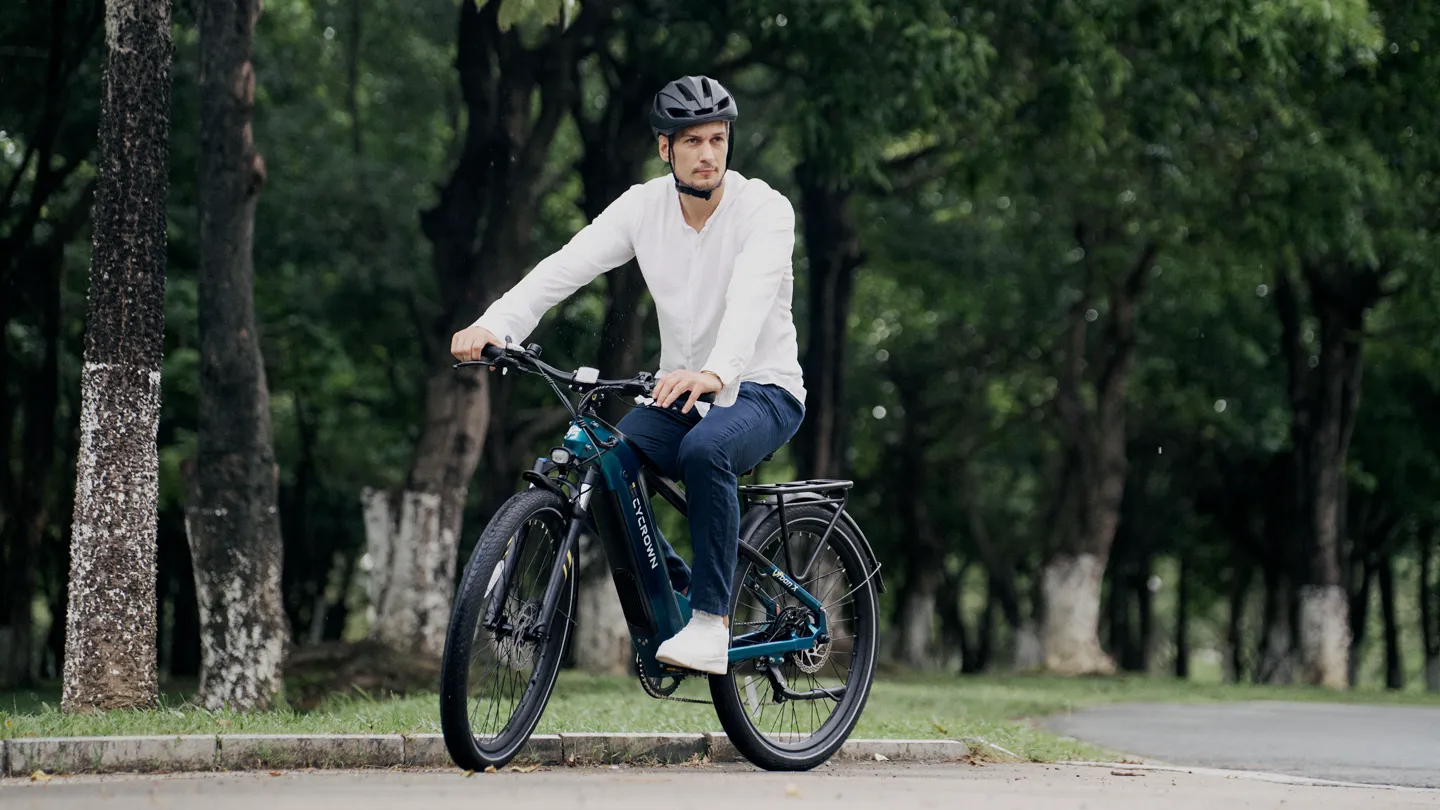
Section 316.003 defines it as a bicycle or tricycle with fully operable pedals, a seat or saddle for the rider, and an electric motor of less than 750 watts, which also falls into one of three classes.
Read that list again, because every item is load-bearing. No working pedals and it is not an electric bicycle. No seat and it is not an electric bicycle. A motor at or above 750 watts and it falls outside the definition, whatever the shop called it.
Note the wording: less than 750 watts, not 750 or fewer. A machine advertised as exactly 750W sits right on that line, and the figure that counts is the one on the bike's own label rather than the one in a catalogue.

The three classes
Class 1 assists only while you are pedalling and stops assisting at 20 mph. Class 2 may be propelled by the motor alone, which is the throttle you can ride without pedalling, and also stops at 20 mph. Class 3 assists only while you are pedalling and stops assisting at 28 mph.
All three are electric bicycles under Florida law and all three are legal on the road. The class matters less for whether you may ride and more for where: a trail manager who restricts e-bikes usually does it by class.
What you do not need
Section 316.20655 is explicit. An electric bicycle and its rider are not subject to the law on financial responsibility, driver or vehicle licences, vehicle registration, title certificates, or the rules for off-highway motorcycles and off-highway vehicles.
In plain terms: no licence, no plate, no title, no insurance requirement. If someone tells you to register an e-bike in Florida, they are thinking of a different machine.

Where you may ride, and who can say no
The statute says you may ride an electric bicycle wherever bicycles are allowed, including streets, highways, roadways, shoulders, bicycle lanes and bicycle or multiuse paths.
Then it hands a good deal of that back. A local government may pass an ordinance governing e-bikes on the streets, highways and sidewalks it controls. Whoever runs a bicycle path, multiuse path or trail network may restrict or prohibit e-bikes on it outright. The same goes for authorities over a beach or a dune.
So the honest answer to “can I ride it there” is that state law permits it and the local rule decides. Check the specific trail before you plan a route around it, not after.
On the sidewalk you are a pedestrian
Riding along a sidewalk or across a crosswalk gives you the rights and duties of a pedestrian, not of a vehicle. That cuts both ways.
You must yield to anyone on foot, and you must give an audible signal before you overtake and pass them. A bell costs almost nothing and is the difference between a courtesy and a citation.

Lights are not optional after dark
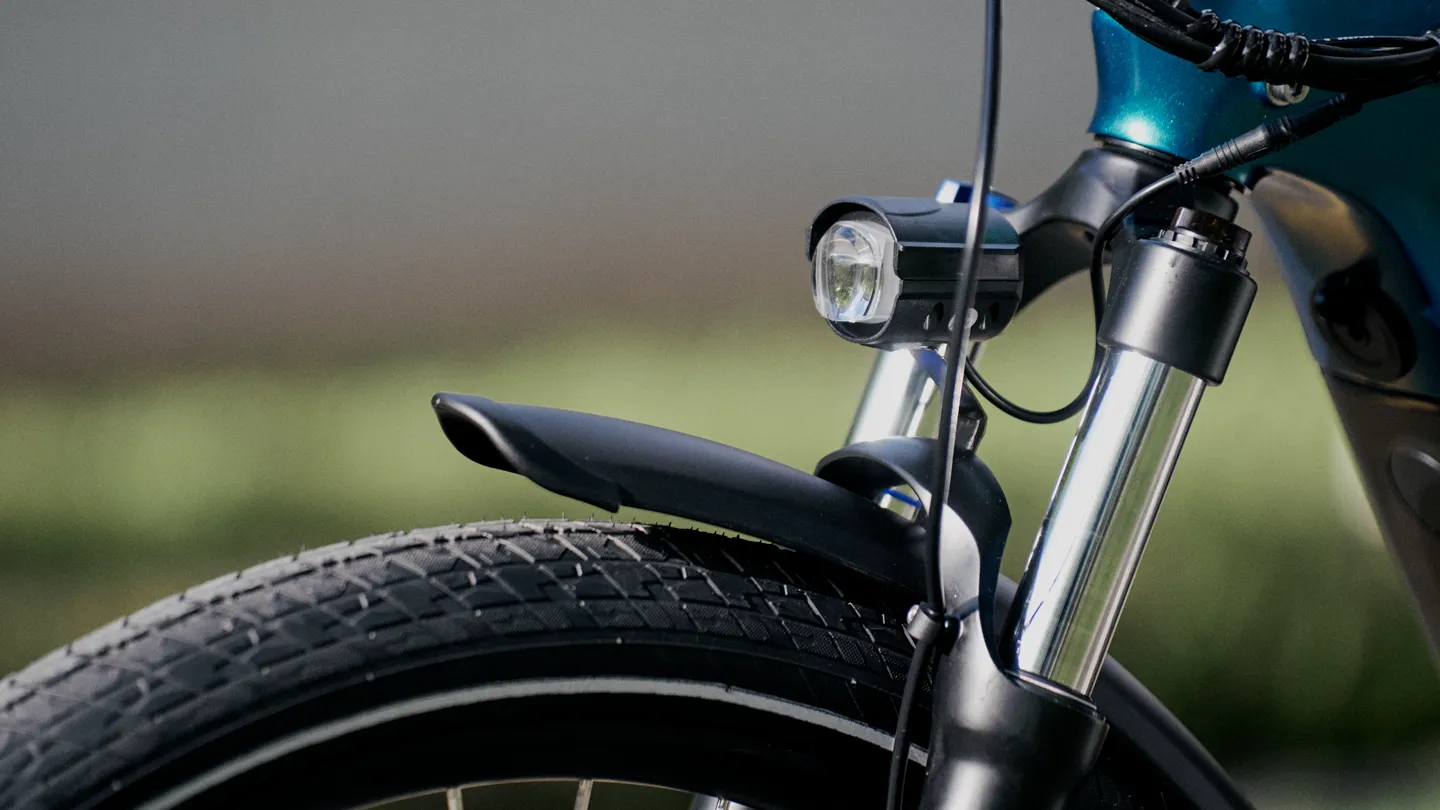
Between sunset and sunrise a bicycle must carry a white front lamp visible from at least 500 feet, and at the rear both a red lamp and a red reflector, visible from 600 feet.
Note the rear needs a lamp and a reflector. A reflector on its own does not satisfy the rule, and plenty of bikes ship with only one of the two.
Helmets and age
A rider or passenger under 16 must wear a properly fitted and fastened bicycle helmet meeting the federal standard. For a first violation the court dismisses the charge on proof that a compliant helmet was bought.
Florida's e-bike statute sets no minimum age of its own, including for Class 3. Several other states do, so advice written for elsewhere will not match what applies here.
Over 16 the helmet is your call. We will say what we say in the shop: 28 mph is traffic speed, and we wear one.
The label on the bike, and why not to touch it
Since January 2021 manufacturers and distributors must permanently affix a label in a prominent place on every electric bicycle, giving the classification number, the top assisted speed and the motor wattage.
That label is the document a police officer or a trail warden reads. If your bike has none, or the figures on it do not match how the bike behaves, you are the one carrying that argument.
It is also against the statute to tamper with or modify an e-bike so as to change its motor-powered speed capability unless the class label is replaced to match. Unlocking a speed limiter and leaving the old sticker on is exactly what the provision describes.
Two more requirements that are easy to miss
The motor must disengage or cease to function when the rider stops pedalling or when the brakes are applied. On any decent bike the brake levers cut the motor; if yours does not, that is a fault worth fixing rather than a quirk.
The bike must also meet the federal equipment and manufacturing requirements for bicycles set by the Consumer Product Safety Commission at 16 C.F.R. part 1512 — brakes, reflectors, construction and the rest.
When it stops being a bicycle
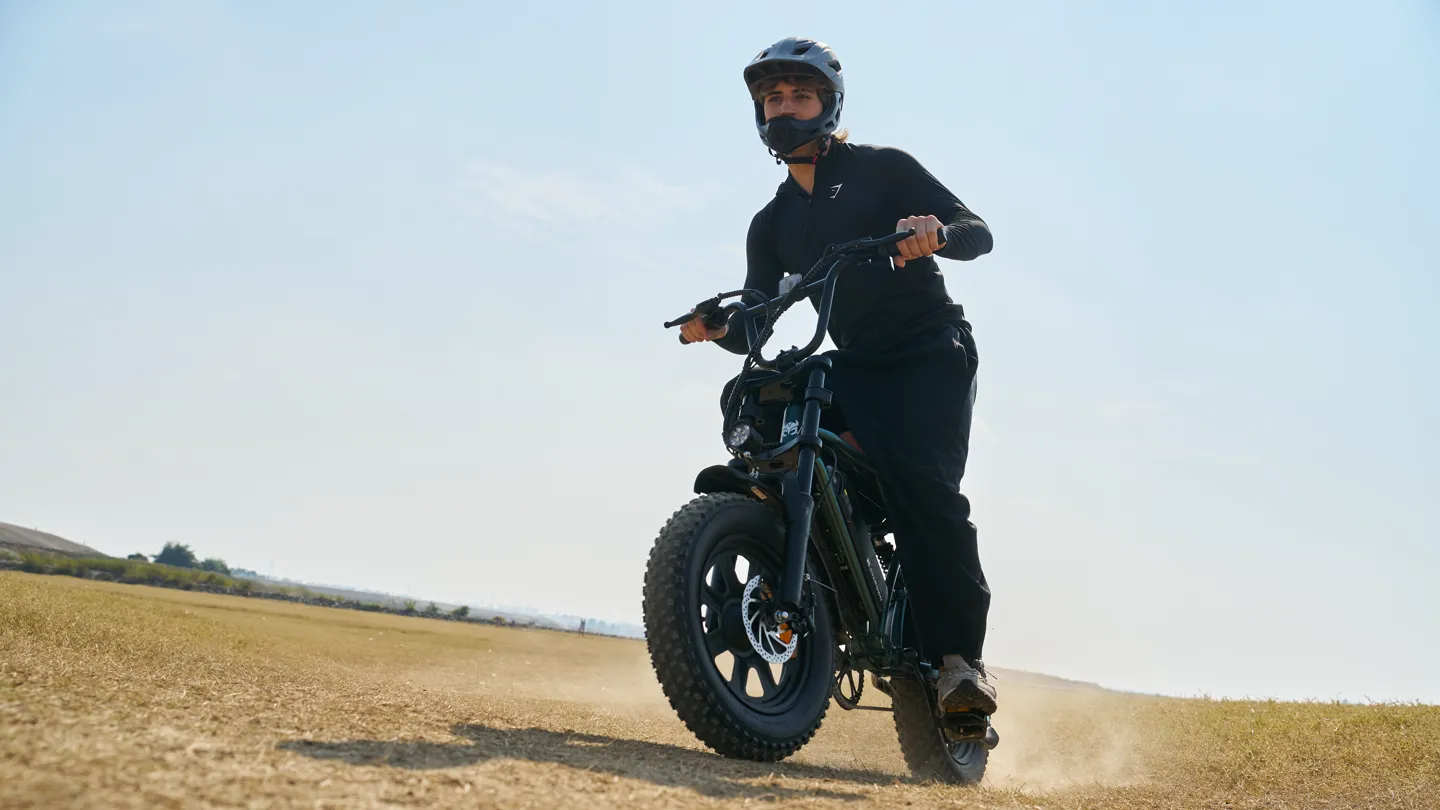
Two things take a machine outside the definition: no working pedals, and a motor that is not under 750 watts. An off-road model without pedals is not an electric bicycle however it is marketed, and none of the protections above attach to it.
That matters most before you buy rather than after. Tell us where you plan to ride and we will tell you straight whether the model you want fits, including when the answer costs us the sale.
This is a summary, not legal advice
The text above is drawn from Florida Statutes 316.003, 316.20655 and 316.2065 as they stand on the date at the top of this page. Statutes are amended and local ordinances change more often than that.
For anything that turns on the outcome — a citation, an insurance question, a dispute over a trail — read the current statute or talk to a lawyer. We sell bicycles; we are not your counsel.
Volt World
7226 W Colonial DrOrlando, FL 32818
Monday to Friday, 9:00 AM to 6:00 PM EST